|
<
ECU Evolution >
|
|
|
|
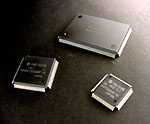
The
first generation of
automotive ECU's were
8-bit, and relatively
simple. However modern
vehicles now use
advanced 32-bit
processors, with over
ten times the data and
many more parameters.
The introduction of
automatic gearboxes and
computer controlled
suspension, as well as
features such as the CAN
immobilizer (Controller
Area Network) make
tuning these ECU's a
very difficult and time
consuming process.
For accurate tuning it
is important to control
the main ECU, as piggy
back electronics don't
take into account other
factors. For example a
SLD (Speed limiter
Device) can be installed
to delimit a vehicles
top speed. The unit
works by intercepting
and modifying the signal
from the speed sensor to
the ECU. So, for example
if you're travelling at
180km/h the ECU will
think you're still
traveling at 150km/h.
However, what about the
other functions that
rely on the speed
signal, such as the
power steering? These
will not function as
designed, since the data
has been modified and is
now incorrect.
|
|
|
|
|
|
|
|
< "Perfect Tuning from
Mr. Niikura" >
|
|
|
|
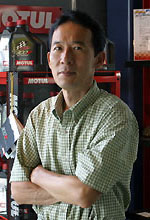
For
perfect tuning it is
necessary to modify the
main computer. This is
true whether you want to
increase or decrease a
vehicles performance.
Over time a vehicle
evolves. There is a
tendency to assume that
the content of the ECU
doesn't change, but this
isn't the case. Both the
ECU and the car evolve
together.
If a vehicle is to be
used as a track car at a
fixed temperature and
air pressure, then it
may be possible to use
an interchangeable
computer. Of course this
isn't realistic, as a
vehicle will be driven
in various conditions
throughout the seasons.
The only solution is to
take the main computer
and tune it. This is
what we consider to be
"Perfect".
It has been said that
replacement ECU's were
growing in popularity,
but this isn't the
case.
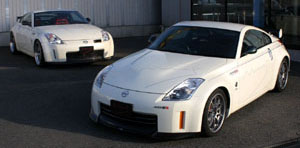
Mine's will always
strive for perfection
when tuning the main
ECU, and seek to tune
the ECU's of the next
generation of vehicles
such as the new GT-R,
350Z and Lancer
Evolution. With these
new vehicles comes new
technology, such as ETC
(Electronic Throttle
Control) and Variable
Valve Timing.
|
|
|
|
|
|
|
|
< The reality of
computer tuning, and what we aim
for >
|
|
|
|
 There
is a tendency when tuning to only
focus on how much extra power and
torque can be gained. However,
tuning is like creating music or
a painting. Changing the
fuelling, timing, boost pressure
etc gives way to infinite
combinations. No two ECU's are
the same. There
is a tendency when tuning to only
focus on how much extra power and
torque can be gained. However,
tuning is like creating music or
a painting. Changing the
fuelling, timing, boost pressure
etc gives way to infinite
combinations. No two ECU's are
the same.
The ultimate goal is to create a
better "picture", or better
"music" with the combinations
available. Although there is a
tendency to seek more power
forcefully, we have to remember
that there are reasons for the
limitations imposed by the
manufacturer. If we ignore these
limitations and only seek more
power, then the cars durability
and drivability will be
compromised.
As a tuner we are proud to be
able to gain the maximum power,
torque and drivability within the
boundaries imposed upon us,
whilst maintaining the self
learning function.
Many VX-ROM users like to change
the ECU when they change their
vehicle. For them the VX-ROM
makes the car special. They love
Mine's tuning and want the same
level of tune on their new
vehicle as their
old.
In a way it's
like enjoying a nice concert or
buying a nice painting by the
same artist.
We believe that a good tuner
listens to a customer's
requirement, and provides a tune
to fulfil their needs.
|
|
|
|
|
< In search of Power
>
|
|
|
|
One of
the main purposes of
computer tuning is to
increase the power
output of an engine.
It is often said that by
changing the computer we
obtain more horsepower,
but it is not just the
power that matters.
Of course initially we
seek more power, but
this is just the
beginning of the
process. It takes a few
days to tune a car for
performance gain with
the use of a data
logger, and once this is
complete then the fine
tuning begins. A tuner
improves the tune for
response and
drivability, and finally
creates a work of art or
a tuned computer. This
artistic work is our
endless goal.
|

|
|
|
|
|
|
< In search of Speed
>
|
|
|
|
When
tuning the computer,
whether it is naturally
aspirated or turbo
charged, we tend to ask
only one thing. How fast
will it be?
This is not always
appropriate. For example
let's look at an example
of an up-to-date
electronic throttle.
This is designed by the
manufacturer to improve
throttle response, but
if we in turn increase
the response it doesn't
necessarily benefit the
driver. We may degrade
the drivability and fuel
efficiency as well as
the handling. This
breaks the balance, and
can make the car tiring
to drive.
As some drivers might
comment, it's not that
the car is actually
faster, it just appears
to be faster. The
electronic throttle is
one of the new
technologies we are
focusing on.
|
|
|
|
|